


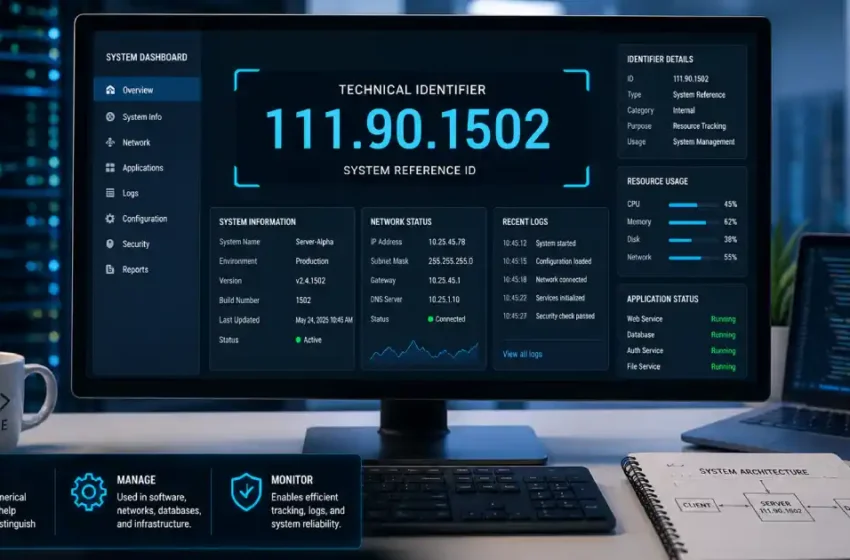
111.90.1502 Explained: Meaning, Uses and Technical Overview
Keywords 111.90.1502 is commonly encountered by those searching for information about a technical id, a software id or system generated value. If 111.90.1502 does not identify a publicly available consumer product or a publicly available free service software, then identifiers such as 111.90.1502 can be encountered in modern technical contexts where they refer to an artifact, a resource, a version, a server, a system setting or other artifact within some specific knowledge base.
This article only addresses the many potential interpretations and the various locations in which 111.90.1502 and its technical designator(s) are used.
Table of Contents
What Is 111.90.1502?
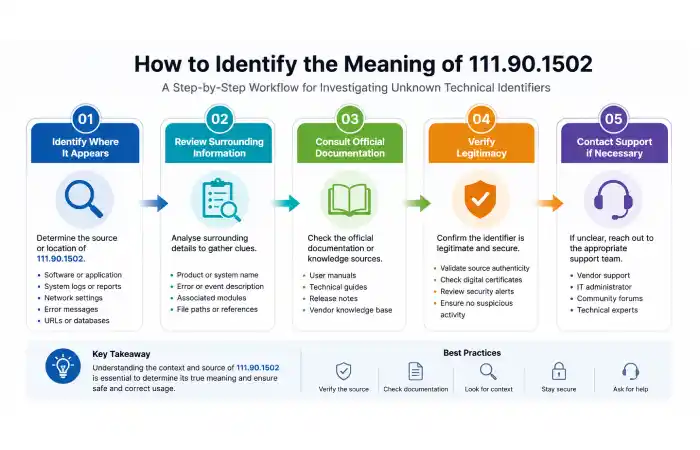
111.90.1502 is the organized numerical identifier that may be related with:
- Software versions
- Network resources
- Internal system references
- Database records
- Application builds
- Server-related identifiers
- Technical documentation references
In the absence of an explicit public specification, its exact meaning is context-dependent on the scope of the individuality within a given program. For more related articles visit our website
Quick Definition
| Element | Explanation |
| Identifier | 111.90.1502 |
| Category | Technical reference code |
| Possible Usage | Software, networking, databases, systems |
| Public Standard | Not currently recognised as a universal standard |
| Clarification | Context-dependent |
Understanding How Technical Identifiers Like 111.90.1502 Work
In contemporary technology, systems utilize numerical representations for cataloguing.
Examples include:
- Application build numbers
- Firmware versions
- Server addresses
- Internal tracking codes
- Configuration profiles
- Deployment identifiers
When we want to distinguish between system resources by a means other than lengthy names, we may assign values like 111.90.1502 to them.
Common Environments Anywhere 111.90.1502 May Seem
Software Growth
Developers often assign numerical identifiers to:
- Software releases
- Patch versions
- Build packages
- Testing environments
For example:
- Version 111
- Minor update 90
- Build 1502
Although the exact interpretation varies between organisations.
Network Infrastructure
Network administrators may encounter similar formats within:
- Server references
- Routing configurations
- Internal host identifiers
- Infrastructure monitoring systems
Database Systems
Large databases frequently use numeric references to identify:
- Records
- Transactions
- Assets
- User sessions
Technical Identifier Comparison Table
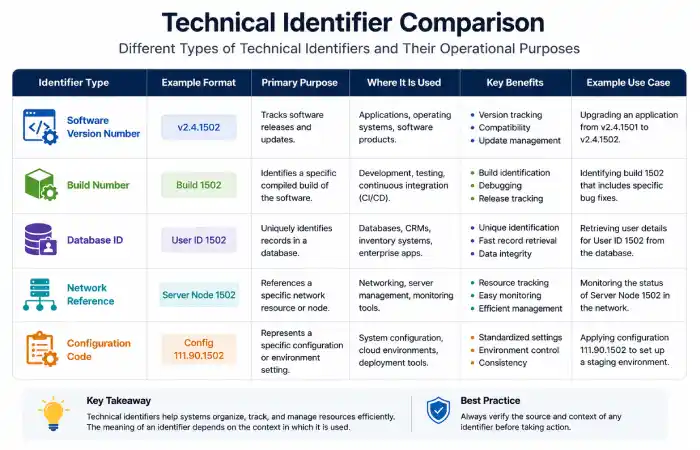
| Identifier Type | Purpose | Example Usage |
| Version Number | Tracks software releases | v2.4.1502 |
| Build Number | Identifies compiled software | Build 1502 |
| Database ID | Unique record reference | User ID 1502 |
| Network Reference | Internal infrastructure tracking | Server Node 1502 |
| Configuration Code | Environment management | Config 111.90.1502 |
This shows that 111.90.1502 could potentially have a few roles depending on what environment you’re in.
How to Determine the Meaning of 111.90.1502
This is an identifier which when you see you should have a methodical way of finding out.
Workflow: Identifying the Source of 111.90.1502
Step 1: Identify Where It Appears
Check whether it is found in:
- Software documentation
- Application logs
- Network settings
- Error messages
- URLs
- Databases
Step 2: Review Surrounding Information
Look for:
- Product names
- System labels
- Error descriptions
- Version references
Step 3: Consult Official Certification
Search:
- Product manuals
- Technical support resources
- Developer documentation
Step 4: Verify Legitimacy
Ensure that the identifier belongs to an authorized source rather than an illegitimate system.
Step 5: Contact Support if Necessary
The vendor may offer more insight if the identifier is part of proprietary software.
Security Considerations for 111.90.1502
Whenever users encounter unfamiliar technical identifiers, caution is advisable.
Potential concerns include:
Legitimate Uses
- Software version tracking
- Internal references
- Server management
- Infrastructure monitoring
Situations Requiring Verification
- Suspicious emails
- Unknown download prompts
- Unexpected system alerts
- Unrecognised network activity
A numerical identifier alone is not evidence of malicious activity, but its source should always be verified.
Trustworthiness and Legitimacy Assessment
Users frequently wonder whether identifiers such as 111.90.1502 indicate a trustworthy service.
Several factors can help evaluate legitimacy:
| Verification Factor | What to Check |
| Official Documentation | Is the identifier documented? |
| Vendor Support | Can support explain it? |
| Security Certificates | Are systems properly secured? |
| Community References | Do reputable sources mention it? |
| Technical Context | Does it fit the environment? |
Practical Use Cases
Software Maintenance
Administrators may use identifiers to:
- Track updates
- Monitor deployments
- Manage release histories
Network Operations
Infrastructure teams often rely on numerical references to:
- Locate assets
- Monitor servers
- Troubleshoot issues
Database Administration
Unique identifiers simplify:
- Record retrieval
- Audit logging
- Transaction management
What Users Should Expect
Realistic Expectations
It is important to understand that 111.90.1502 by itself does not automatically reveal:
- A specific product
- A website
- An application
- A service provider
Instead, the identifier must be interpreted within its technical environment.
Users should expect to:
- Gather contextual information
- Review documentation
- Investigate system logs
- Consult relevant support channels
Attempting to interpret the identifier without context may lead to incorrect conclusions.
Advantages and Limitations of Numeric Technical Identifiers
Advantages
- Easy machine processing
- Efficient indexing
- Consistent tracking
- Improved system organisation
- Simplified record management
Limitations
- Difficult for non-technical users
- Often lack descriptive meaning
- Require documentation
- Context-dependent interpretation
Alternatives to Numeric Identifiers
Many systems combine numbers with descriptive naming conventions.
Examples
| Method | Example |
| Numeric Identifier | 111.90.1502 |
| Descriptive Label | Production Database Server |
| Hybrid Naming | DB-Production-1502 |
| Version Tag | Release-2026.1 |
Hybrid approaches often improve readability while retaining technical precision.
Best Practices When Encountering 111.90.1502
Follow these recommendations:
- Do not assume its purpose immediately.
- Identify the system where it appears.
- Check official documentation.
- Verify source legitimacy.
- Avoid downloading files from unknown references.
- Keep software updated.
- Consult technical support when necessary.
Conclusion
111.90.1502 i Is a means of identification, the significance of which can only be determined within the context of the system in which it is used. If it occurs in hardware or software documentation, in relation to networking or PC naming conventions, in information technology or operational infrastructure, then 111.90.1502 is a method by which systems were made easier to sort out and run smoothly. Do not assume, seek out documentation, confirm sources and always follow security procedures when finding old or alien numbers.
